Honors Experiences
Heritage in the Kitchen: Preserving Family Traditions and Building Community through Culinary Arts
Overview
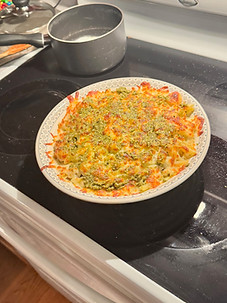
For my project, I explored the intersection of food, family tradition, and community service. Over 12 weeks and 75 hours, I used our family cookbook to teach myself to cook, working alongside my grandmother, Rhea Jackson, as my mentor as I mastered the recipes and techniques she's used for years to care for our family. The main objectives were to master ten core family recipes (from the Christmas pies through to the various American dinners) using the family cookbook, and develop a range of packable meals suitable for my lifeguard colleagues during their long summer shifts.
The project was divided into three core phases:
-
Research & Documentation (15 hours): Weekly interviews with my grandmother to record the histories and contextual notes behind the dishes in our existing family cookbook. Reading Salt, Fat, Acid, Heat by Samin Nosrat and The Art of Gathering by Priya Parker.
-
Skill acquisition and independent trials (45 hours): hands-on kitchen sessions shadowing my Grandma, then independent 'test kitchen' trials where I practiced things like pastry crust crimping, seasoning balance, and temperature control to make the dishes myself.
-
Community Service & Distribution (15 hours): Designing and trialing a 5-part rotation of 'shift-friendly' meals which would remain food safe in insulated coolers for the duration of a 12-hour lifeguard shift at the pool, collecting peer feedback on the convenience and impact on morale and running a series of shared meals around the theme of storytelling.
Reflection
Our original intention for this project was to fill the gap between the very heavy academic science we were doing and the values of empathy, family heritage, and the everyday stuff of life. It started out as simply using our family cookbook to learn the recipes, but very quickly evolved into a much deeper exploration of discipline, communication, and what it actually means to build community.
The practical basis of it all was a lot of practice and mentorship. Working in my grandmother's kitchen was the key. I saw firsthand how she approached cooking not as a job to be done but as a way of caring for the people in the family. Observing her in action, the way she balanced her savory seasoning, handled her pie crusts, etc., was the real education. Reading about it in books gave me a real understanding of the science behind it all and that, in turn, allowed me to apply that knowledge in my own test kitchen when things didn't go quite as planned. From that point on, I took those skills out of the home kitchen and developed cold-storage meal options that could withstand the summer pool heat so my colleagues had something to eat during those long shifts.
My perception of "cooking with love" has gone from a rather trite phrase to a very real discipline. Good cooking is about attention to detail, patience, and the ability to problem-solve under pressure. Preserving my grandmother's recipes really drove home the power of intangible heritage in keeping people connected across generations. Taking those home-cooked meals to the pool showed how food can break down barriers and build trust. A period of demanding change can be very demoralizing, but bringing everyone together for a good meal completely changed the atmosphere. It gave people a reason to stop, to check in, to connect. It showed how much a small, simple act of service can immediately improve the everyday working environment.
Looking ahead, the lessons from this experience will be fundamental in shaping who I want to be as a future doctor. The very skills required to work effectively with patients are the same skills we were drilled in at the table: active listening, empathy, patience, and clear communication. The same principle applies as with explaining the background of a dish or walking someone through a recipe. You have to meet people where they are, strip away the jargon, and make the unfamiliar accessible. You can't build trust at a distance. You have to be there, be present, and offer practical support. That's the direction I'm heading in. I want to ensure that wherever I go in the future, be it a clinic, a classroom, or my own community, people feel genuinely supported, valued, and empowered.